Career Opportunities
Explore skilled employment opportunities across eligible industries.

Discover skilled independent, state-nominated, regional and employer-sponsored pathways for living and working in Australia.
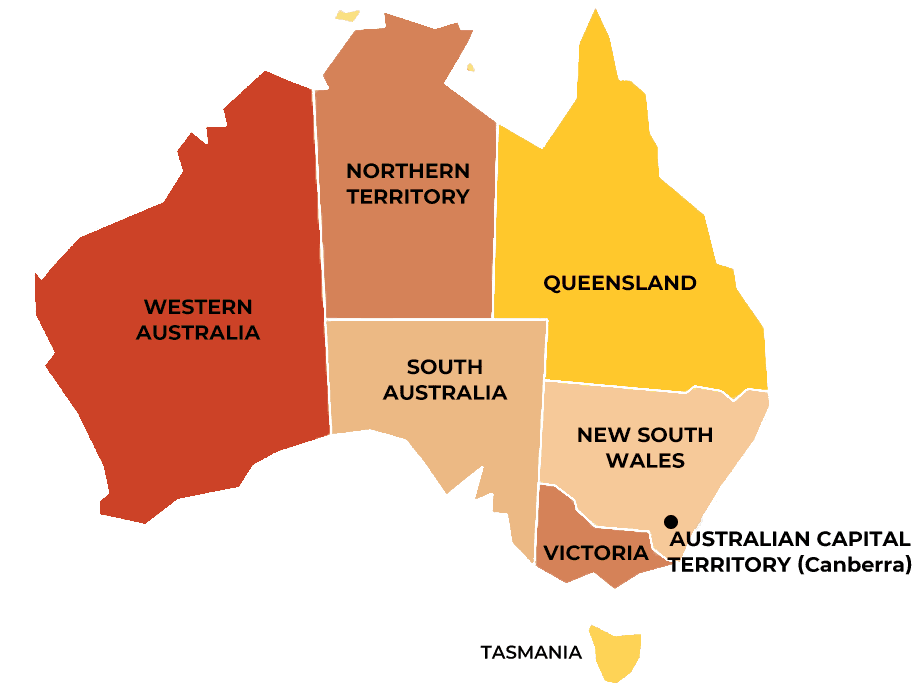
Explore skilled employment opportunities across eligible industries.
Australia has an established healthcare and public-service system.
Access internationally recognised education and training opportunities.
Live in diverse communities with established public infrastructure.
Eligible applicants may explore state and regional migration pathways.
Build professional networks in a developed and diverse economy.
Skilled Migration Process
Follow these general stages to understand the Australian skilled migration and visa application process.
Identify a suitable skilled, state-nominated, regional or employer-sponsored pathway based on your profile.
Confirm that your nominated occupation is eligible for the visa pathway you plan to pursue.
Obtain a suitable assessment from the relevant Australian assessing authority for your nominated occupation.
Complete an accepted English-language test when required and obtain results that support your visa eligibility and points claim.
Review factors such as age, qualifications, employment experience, English ability and nomination eligibility.
Create a SkillSelect profile and submit accurate details about your qualifications, work history and migration preferences.
Apply for state, territory, regional or employer nomination when it is required for your selected pathway.
Wait for an invitation to apply. Submitting an Expression of Interest does not guarantee that an invitation will be issued.
Submit the online visa application within the invitation period and provide evidence supporting the claims in your profile.
Complete any required health examinations, police clearances and identity checks requested for the application.
Monitor your application, respond to any further information requests and wait for the final visa outcome.
Explore skilled, employer-sponsored and family migration options for living, working and building your future in Australia.
Explore points-tested and nominated migration pathways for eligible professionals with in-demand skills.
Class 189
A permanent visa pathway for invited skilled workers who do not require state, territory or employer nomination.
Class 190
A permanent skilled visa for eligible applicants nominated by an Australian state or territory.
Class 491
A provisional pathway for invited applicants nominated by a state or territory, or sponsored by an eligible relative.
Australian employers may sponsor eligible overseas workers for temporary, regional or permanent skilled positions.
Class 482
A temporary skilled visa for eligible workers sponsored by an approved Australian employer.
Class 186
A permanent residence pathway for eligible skilled workers nominated by an Australian employer.
Australian citizens, permanent residents and eligible New Zealand citizens may sponsor qualifying family members.
Partner Visas
Visa options for eligible spouses, de facto partners and prospective spouses.
Parent Visas
Pathways for eligible parents of Australian citizens, permanent residents or eligible New Zealand citizens.
Child Visas
Visa pathways for eligible dependent, adopted or orphaned children.
Other Family
Limited visa options for eligible carers, remaining relatives and aged dependent relatives.
Settlement Assistance
Assistance with understanding Australian culture, communities and essential systems.
Guidance with job searching, career preparation and professional development.
English-language support to improve communication and workplace confidence.

Your New Beginning
Settle with confidence
Contact Medcity Study Abroad for personalised guidance on migration and post-arrival support.
Australia Migration FAQs
Find answers to common questions about migrating to Australia from Kerala, including skilled migration, subclass 189, 190 and 491 visas, eligibility, points, skills assessments and employer-sponsored pathways.
There are different pathways to migrate to Australia depending on your occupation, qualifications, work experience, age, English language ability and other eligibility factors. Skilled migration options may include the Skilled Independent visa (subclass 189), Skilled Nominated visa (subclass 190), Skilled Work Regional visa (subclass 491) and eligible employer-sponsored pathways.
Common skilled migration pathways include the Skilled Independent visa (subclass 189), Skilled Nominated visa (subclass 190) and Skilled Work Regional visa (subclass 491). Employer-sponsored and other migration pathways may also be available depending on an applicant's circumstances and current Australian immigration requirements.
The Skilled Independent visa (subclass 189) is a points-tested skilled migration pathway for eligible invited workers. It generally does not require nomination by an Australian state or territory government. Applicants must satisfy the applicable eligibility and invitation requirements.
The Skilled Nominated visa (subclass 190) is a points-tested skilled migration pathway that requires nomination by an Australian state or territory government. Nomination criteria and eligible occupations can vary between states and territories.
The Skilled Work Regional visa (subclass 491) is a provisional skilled visa for eligible applicants who are nominated by an Australian state or territory government or sponsored by an eligible family member, subject to the applicable requirements. It is designed for living and working in designated regional areas.
Eligibility depends on the visa pathway. Factors can include age, nominated occupation, qualifications, relevant work experience, English language proficiency, skills assessment, points score, health and character requirements, and state or territory nomination where applicable.
Certain Australian skilled visas use a points-based system. Points may be awarded for factors such as age, English language ability, skilled employment experience, educational qualifications and other eligible criteria. Meeting a minimum threshold does not necessarily guarantee an invitation to apply.
A suitable skills assessment is generally required for many skilled migration pathways. The relevant assessing authority and assessment requirements depend on your nominated occupation. Applicants should check the requirements applicable to their occupation and intended visa pathway.
English language ability is an important requirement for many Australian skilled migration pathways. Depending on the visa and circumstances, applicants may be able to demonstrate their English ability through an accepted test such as IELTS, PTE Academic or another test recognized for the relevant immigration purpose.
Some Australian skilled migration pathways do not necessarily require an employer job offer. Other pathways, particularly employer-sponsored visas, depend on sponsorship or nomination by an eligible employer. The appropriate option depends on your profile and the current visa requirements.
State or territory nomination is relevant to certain skilled migration pathways, including subclasses 190 and 491. Each Australian state or territory can have its own occupation lists, eligibility criteria and nomination requirements, which may change over time.
Employer-sponsored pathways allow eligible Australian employers to sponsor or nominate suitably skilled overseas workers where the relevant immigration requirements are satisfied. Eligibility depends on factors such as the visa pathway, occupation, employer, skills, experience and other applicable requirements.
Documents vary by visa pathway but may include a valid passport, educational certificates, employment evidence, English language test results, skills assessment documents, identity records, health examinations, police or character documents and other evidence required for the particular application.
Processing times vary depending on the visa subclass, application circumstances, documentation, government processing priorities and other factors. Applicants should check the latest processing information published by the Australian Department of Home Affairs.
Migration consultants can help applicants understand potential pathways, organize information, assess general eligibility and understand the steps involved in the migration process. Where Australian immigration assistance or representation is regulated, applicants should ensure that the person providing those services is appropriately authorized.
Australian immigration requirements, occupation lists, state nomination criteria and visa rules may change. Always verify the latest requirements with the Australian Department of Home Affairs and other relevant official authorities before making an application.